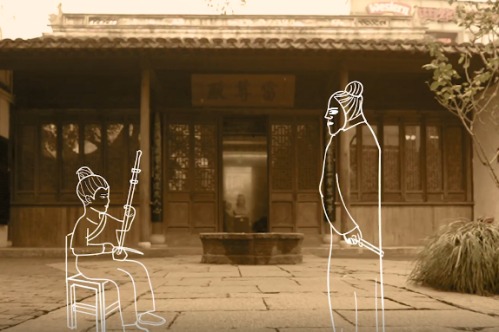
Hua Yanjun
Introduction
Hua Yanjun, also known as A Bing, was a blind Chinese folk musician renowned for his profound contributions to traditional Chinese music. Born in 1893 in Wuxi, a city in East China's Jiangsu province, Hua became a master of the erhu and pipa, two traditional Chinese instruments. He is best known for his poignant composition, Er Quan Ying Yue ( Spring Water Reflects the Moon), which remains a seminal piece in Chinese folk music. Hua's music, characterized by its emotional depth and technical complexity, continues to influence musicians globally and is considered a defining component of Chinese cultural heritage.
Early Life
Hua Yanjun was born into a Taoist family in Wuxi, Jiangsu province. His father, a Taoist priest, introduced him to music at an early age, teaching him to play instruments like the erhu and pipa during religious ceremonies. Despite the nurturing environment, Hua's life was marked by adversity. He lost his eyesight due to illness and was left to fend for himself after his father passed away. These hardships pushed him into a life of itinerant musicianship, performing on the streets to earn a living.
This period of struggle profoundly influenced Hua's musical style, infusing his compositions with the sorrow and resilience that would come to characterize his work. His mastery of the erhu, in particular, allowed him to express a wide range of emotions, from joy to profound sadness, earning him a lasting place in the pantheon of traditional Chinese music.
Musical Career
Development as a Musician
Hua Yanjun's development as a musician was deeply intertwined with his personal struggles and the cultural landscape of early 20th-century China. Despite his blindness, Hua honed his skills on the erhu and pipa, becoming a virtuoso performer. His musicianship was marked by a unique ability to convey complex emotions, a talent that set him apart from his contemporaries.
Hua's time as a street musician in Wuxi allowed him to connect deeply with the people, drawing inspiration from their lives and stories. This exposure to diverse human experiences enriched his musical vocabulary, helping him craft compositions that resonated with listeners on a deeply emotional level. His performances, often characterized by their improvisational nature, were a testament to his innovative spirit and deep understanding of traditional Chinese musical forms.
Notable Works
Among Hua's oeuvre, Er Quan Ying Yue (Spring Water Reflects the Moon) stands as his most celebrated work. Composed for the erhu, this piece is renowned for its haunting melody and intricate emotional tapestry. It reflects Hua's personal pain and the universal themes of longing and resilience, making it a timeless masterpiece in Chinese music. The piece's structure, consisting of a theme and variations, showcases Hua's technical prowess and his ability to evoke complex emotions through melody.
Commemoration
Hua Yanjun's contributions to music and culture have been commemorated in various forms. In Wuxi, his birthplace, efforts to celebrate his legacy include musical performances themed around his compositions and cultural events that highlight his influence. The city has also established institutions and festivals dedicated to promoting his work and the broader tradition of erhu music.
Internationally, Hua's influence is acknowledged through performances and adaptations of his works by global musicians, such as the acclaimed violinist Chin Kim. These efforts not only honor Hua's legacy but also introduce his music to new audiences, ensuring that his contributions to the world of music continue to be appreciated and celebrated across cultures and generations.








